Rahul Laxman Patil Research · Youth · Dialogue

India · Bay of Bengal Region

Rahul Laxman Patil

  • Researcher
  • Youth Engagement Advocate
  • Track-II Diplomacy Strategist

For close to two decades I have worked on a single question: how do societies that share rivers, routes, faiths and histories learn to speak to one another again — not through communiqués, but through people. My work sits where research meets youth participation, cultural heritage and unofficial dialogue across South Asia and the BIMSTEC region.

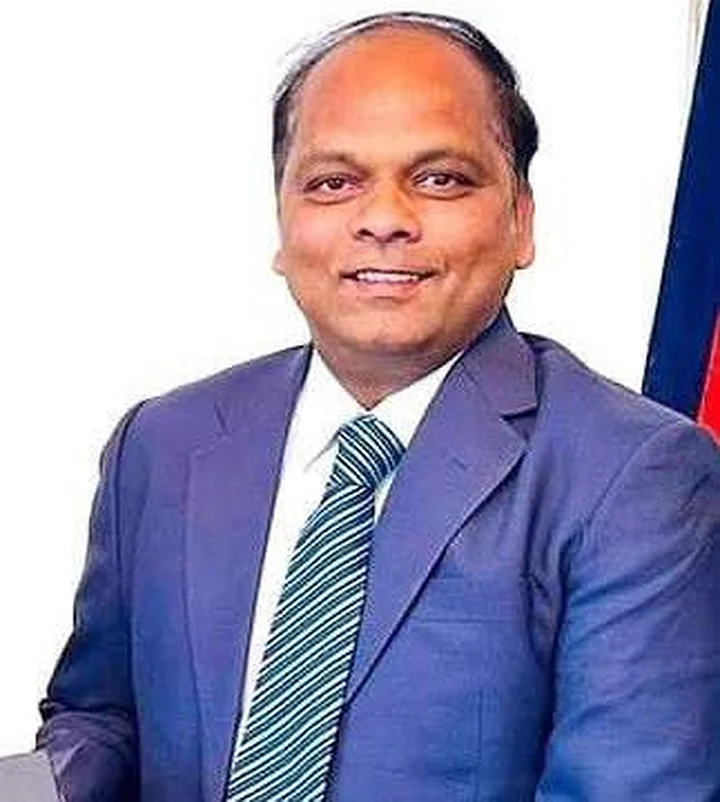
Rahul Laxman Patil, Indian researcher and Track-II diplomacy strategist, in a formal portrait.
Rahul Laxman PatilPortrait

ConvenerLord Buddha Circuit Tri-Services Expedition

Themes of work: South Asian regional cooperation, youth engagement, Track-II diplomacy, cultural exchange, people-to-people dialogue, BIMSTEC and the Bay of Bengal, civilisational heritage, regional connectivity.

01 — Perspective

Diplomacy is not only what states do. It is also what people do.

The Bay of Bengal is one of the oldest conversation spaces in the world. Long before the region was mapped into modern borders, monks, merchants, sailors, scholars and pilgrims moved between the Gangetic plain, the Himalayan foothills, the Irrawaddy delta, the Chao Phraya basin and the island of Lanka. They carried grain and cloth, but they also carried ideas — grammar, astronomy, medicine, architecture, and a shared moral vocabulary. That circulation is the deep infrastructure of South Asia, and it did not require a treaty.

My work begins from that observation. Formal diplomacy is essential, but it is slow, cautious and periodically frozen by events. Underneath it runs a second layer — researchers comparing notes, universities exchanging students, cultural institutions co-hosting exhibitions, veterans and young riders crossing a land port together, families discovering that a festival they thought was theirs alone is also observed four hundred kilometres away in another country. This layer is what practitioners call Track-II, and it is where I have spent most of my professional life.

I am not a diplomat and I do not speak for any government. What I do is more modest and, I would argue, more durable: I convene. I bring together institutions that rarely share a table — a university, a border authority, an armed forces contingent, a cultural confederation, a state tourism department, a room full of nineteen-year-olds — and I design a shared undertaking that gives them a reason to keep talking after the event ends. The convening is the method. The relationships are the outcome.

Increasingly that work is anchored in the BIMSTEC framework — the seven-country grouping around the Bay of Bengal that connects South and Southeast Asia. BIMSTEC is often described as an under-used platform. I think that is exactly what makes it interesting. Its agenda is technical and economic, which means it is comparatively insulated from the political weather, and its people-to-people pillar is still being written. There is room here for a generation to shape something.
02 — Areas of focus

Six lines of work, one continuous argument.

These are not separate services. They are the same conviction approached from six directions — that understanding between neighbouring societies is built slowly, by people who keep showing up. Select a heading to read further.

Every convening I have designed began as a question written down and argued over. What actually connects the Bay of Bengal countries once you look past trade figures? Which shared heritage is legible to a twenty-year-old and which is only legible to a historian? Where does regional cooperation break down — at the level of policy, or at the level of ordinary familiarity? Research, for me, is not an output that sits on a shelf. It is the design brief for the next engagement.

Read the research themes →

South Asia is among the youngest regions on earth, and the generation now entering adult life has inherited a neighbourhood it had no part in shaping. My interest is in giving young people something real to do inside regional cooperation — not a seat at a symbolic panel, but logistics to run, communities to brief, riders to host, a route to prepare. Responsibility teaches faster than rhetoric.

Explore youth engagement →

Track-II is unofficial dialogue conducted by people who are not empowered to negotiate — academics, former officials in a private capacity, cultural bodies, civil society, practitioners. Its value is precisely its lack of authority: participants can think aloud, test formulations and be wrong without any of it becoming a national position. My contribution is on the design side — building formats in which unofficial contact has a purpose beyond the meeting itself.

Understand the method →

Culture is the most under-rated instrument in the regional toolkit because it does not ask anyone to concede anything. A shared site, a shared text, a shared festival calendar — these establish a baseline of recognition on which harder conversations can later rest. Working along the Buddhist circuit taught me how much of that baseline already exists, unremarked, between India, Nepal, Sri Lanka and the wider Bay of Bengal.

Read on cultural exchange →

South Asia trades less with itself than almost any comparable region, and the reasons are only partly economic. Familiarity is infrastructure too. My regional work concentrates on the Bay of Bengal — a space where India, Bangladesh, Bhutan, Myanmar, Nepal, Sri Lanka and Thailand already share ecology, weather systems, maritime history and religious geography, and where cooperation therefore has something concrete to stand on.

See the regional analysis →

The hardest part of any cross-border initiative is not the idea. It is getting a university, a ministry-linked authority, a cultural confederation, a broadcaster, five state governments and three armed services to agree on a single calendar. That coordination work is unglamorous and it is most of the job. I have come to think of it as a discipline in its own right.

See how it comes together →

03 — Featured work

Two journeys along the same road.

The Lord Buddha Circuit expeditions were built on a simple premise: a route that once carried a teaching across three countries can carry a conversation again. I conceived and convened both.

Rahul Laxman Patil standing with three delegation members between the Indian flag and a partner nation flag during a mission-level engagement.
Tri-nation engagement2025

Heartfulness Lord Buddha Trination Tri-Services Motorcycle Expedition

A three-country ride linking Nepal, India and Sri Lanka along the sites most closely associated with the life and teaching of the Buddha. It set out from Lumbini — his birthplace — on 16 February 2025, and was formally flagged off at Bodhgaya on 19 February by Shri Ram Nath Kovind, former President of India.

The route moved through Sarnath, Bodhgaya and Nalanda, on to Nagarjuna Sagar and Udayagiri, across Karnataka, and concluded with a ceremonial welcome in Jaffna. It was organised in association with the International Buddhist Confederation, with Nalanda University, the Land Port Authority of India and BIMSTEC as partners.

Role Convener Nations Nepal · India · Sri Lanka Flag-off 19 Feb 2025, Bodhgaya

Full initiative record

Rahul Laxman Patil presenting a bouquet at the celebration of the 29th BIMSTEC Day, with the BIMSTEC banner and member-state flags behind.
29th BIMSTEC Day observance08 Jun 2026

Tri-Services Lord Buddha Circuit Motorcycle Expedition

The domestic edition — 4,500 kilometres across seven Indian states between 23 August and 9 September 2025, under the line “Many Languages, Many Cultures — One Bharat, One Spirit.” Riders drawn from the Army, Navy and Air Force travelled together as a single Tri-Services contingent, led on the road by Lt Col Dr Vishal Chopra of the Army Medical Corps.

More than a thousand people joined along the way at halts, campuses and community receptions. Alongside the heritage brief, the expedition carried public messages on road safety and a drug-free India, and presented the armed forces to young audiences as something to aspire to. It was supported by the BIMSTEC Secretariat, Nalanda University, Doordarshan Sports, the Land Port Authority of India, and the governments of Uttar Pradesh, Bihar, Maharashtra, Andhra Pradesh and Telangana.

Role Convener Distance 4,500 km States Seven Dates 23 Aug – 9 Sep 2025

Full initiative record

4,500Kilometres riddenThe 2025 domestic circuit, end to end.
07Indian statesSeven languages, seven cultural regions, one route.
03Nations linkedNepal, India and Sri Lanka on the trination edition.
1,000+Local participantsJoined the contingent at points along the route.

04 — Regional perspective

The Bay of Bengal is not a gap between two regions. It is a region.

For most of the twentieth century, South Asia and Southeast Asia were studied as separate worlds — a habit inherited from colonial administration rather than from anything the map actually says. The Bay of Bengal sits between them, and the countries on its rim have been in continuous contact for two thousand years. BIMSTEC, founded in 1997, is the institutional attempt to take that fact seriously.

Its seven member states — Bangladesh, Bhutan, India, Myanmar, Nepal, Sri Lanka and Thailand — share monsoon systems, cyclone exposure, fisheries, river basins and, in large measure, a religious and literary inheritance. What they do not yet share, at scale, is familiarity. Young people in Colombo, Kathmandu, Dhaka, Thimphu, Yangon, Bangkok and Mumbai know a great deal about the North Atlantic and comparatively little about each other.

That is a solvable problem, and it is not primarily a governmental one. It is answered by exchanges, joint expeditions, co-taught courses, shared heritage circuits, translated writing and the ordinary business of turning up in one another's countries.

On Track-II and regional cooperation

The seven BIMSTEC member states as a connected network A schematic diagram showing Bangladesh, Bhutan, India, Myanmar, Nepal, Sri Lanka and Thailand as nodes linked to one another around the Bay of Bengal, with India highlighted. Nepal Bhutan Bangladesh Myanmar Thailand Sri Lanka India
BIMSTEC — seven member states around the Bay of Bengal, established 1997

Heritage is not a museum. It is a living force — and for young people it can be a reason to travel, to ask questions, and to take pride in something larger than a border.

Rahul Laxman Patil — on the purpose of the Buddha Circuit expeditions

06 — Get in touch

If you are convening something across a border, let's talk.

I welcome approaches from universities, research institutions, cultural bodies, youth organisations, media and anyone working on regional cooperation in South Asia and the Bay of Bengal — for collaboration, dialogue, speaking or research conversations.